Urban Clash Font for Bold Branding and Street-Inspired Design
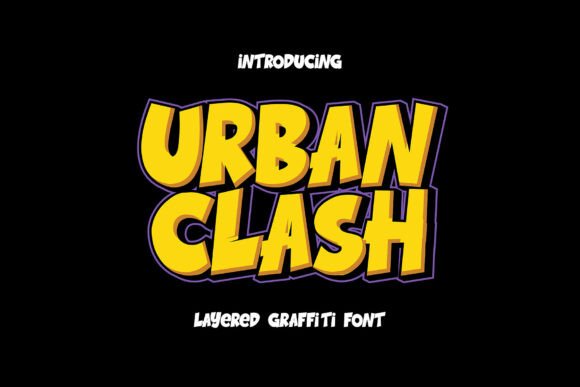
Opening a blank brand board one afternoon, I was hunting for something that would scream “authenticity” without falling into cliché. That’s when I landed on Urban Clash, a graffiti font that somehow feels both raw and refined. As a display font, it doesn’t just sit on the page—it commands it. With its three distinctive layers, Urban Clash brings a 3D impact that’s hard to ignore, making it feel like it belongs on a street mural as much as a modern brand identity.
Urban Clash for Logo Design and Brand Identity
Testing Urban Clash in a logo concept for a boutique creative studio was an eye-opener. The font’s audacious styling immediately stood out against minimalist backgrounds, creating a visual punch that felt fresh and unapologetic. It worked well with a monochrome palette, but even better when paired with a single bold accent color—think neon pink or electric blue. As a Display font, it’s not meant for long paragraphs, but for short, impactful phrases that need to grab attention. This makes it ideal for logos, brand mottos, or taglines that want to make a statement.
On a brand board, Urban Clash helped define a voice that was edgy yet professional. It didn’t clash with more traditional typefaces when used sparingly, which is key for maintaining brand consistency across different platforms.
Urban Clash in Packaging Design and Product Labels
I placed Urban Clash on a mockup for a handmade skincare product line, and it instantly transformed the design from generic to unforgettable. The 3D impact of the font gave the packaging a tactile feel, almost like you could see the paint dripping down the label. It worked particularly well on larger formats like bottles and jars, where the font could breathe and shine. For smaller labels, though, I found it best to use it as an accent rather than the primary text.
The graffiti aesthetic of Urban Clash also resonated with a younger, urban audience, which aligned perfectly with the brand’s target market. However, it’s worth noting that this font may not be the best fit for formal or luxury branding unless the tone of the brand leans toward the rebellious or avant-garde.
Urban Clash on Social Media Graphics and Web Design
When it came to social media layouts, Urban Clash delivered exactly what I needed: a strong visual anchor that stood out against busy feeds. On Instagram posts and Facebook banners, it added a layer of energy that matched the content’s vibe—whether it was promoting a new product or sharing behind-the-scenes stories. Its 3D effect made it pop even on mobile screens, ensuring it wasn’t lost in the sea of scrolling content.
In web design, I used Urban Clash for a hero section on a portfolio site, and it brought a sense of movement and rhythm to the layout. It worked well as a headline font, especially when paired with a clean sans serif for body text. This combination created a nice contrast between the bold and the subtle, enhancing readability while keeping the design dynamic.
Urban Clash and Font Pairing for Balanced Typography
One thing I learned early on was that Urban Clash needs careful pairing. It doesn’t play nicely with every font. When used with a serif font like Baskerville or a modern sans serif like Montserrat, it created a balance that felt intentional rather than chaotic. For a more casual look, pairing it with a script font added a touch of personality without overpowering the message.
If you’re using Urban Clash in a commercial project, it’s important to check the licensing terms. Make sure it’s allowed for use in print, digital assets, or any client deliverables you plan to include. Also, test it at different sizes and on various surfaces—like business cards or large billboards—to ensure it maintains its visual appeal across all mediums.
Urban Clash for Short Phrases and Accent Text
As a Fonts designer, I’ve come to appreciate that Urban Clash shines brightest when used for short phrases. Whether it’s a call-to-action button on a website, a quote on a poster, or a tagline on a business card, it adds a memorable punch. But when it comes to long-form text, it simply doesn’t hold up. It’s not designed for readability in extended passages, so keep that in mind if you’re considering it for anything beyond headlines or accents.
In summary, Urban Clash is a powerful tool for designers who want to inject some street-level energy into their work. It’s not for every project, but when used right, it can elevate a brand’s identity and leave a lasting impression. Just remember to pair it wisely, test it thoroughly, and always respect the font’s role as a display asset rather than a full-time workhorse.