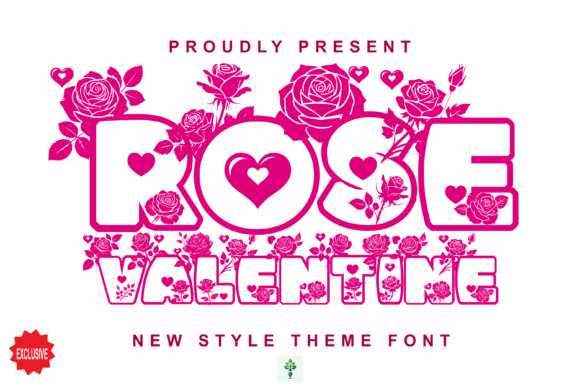
Rose Valentine Font for Vibrant Branding Projects
It was a quiet morning, the kind where your design board feels like a blank canvas waiting to be filled with color and creativity. I had just received a new font in my inbox—Rose Valentine. The name alone hinted at something special, and as I opened it up, I knew this was going to be a game-changer for the branding project I was working on for a small café called “The Blooming Spoon.”
Rose Valentine for Café Branding and Logo Design
Rose Valentine is a display font that brings a vivid spectrum of hues into your typography, making it perfect for projects that need a touch of elegance and imagination. As I began experimenting with it on the café’s logo draft, I noticed how the dynamic vivacity of the typeface immediately transformed the mood of the design. It felt playful yet sophisticated, which aligned perfectly with the café’s brand identity—fresh, artistic, and inviting.
I tested Rose Valentine on a few different mockups: a simple circular logo, a more stylized emblem with floral accents, and even a minimalist version. Each time, the font brought a sense of warmth and approachability. It wasn’t just about aesthetics; it was about conveying the right message through typography.
Rose Valentine on Packaging and Product Labels
As the project moved forward, I needed to think about how the font would translate across different mediums. For the café’s packaging, I used Rose Valentine for the main title on their coffee bags and mugs. The font’s unique curves and flourishes gave the labels a handcrafted feel, which resonated well with the café’s artisanal theme.
One thing I learned early on was that while Rose Valentine is a display font, it can still be effective for short-form text when used sparingly. On product labels, I paired it with a clean sans serif font for the supporting information, ensuring readability without losing the visual appeal.
Rose Valentine for Social Media Graphics and Website Headers
The next step was applying the font to the café’s social media graphics and website headers. Rose Valentine worked beautifully on Instagram posts, especially when used for headlines or call-to-action buttons. Its imaginative allure made each post stand out in a sea of content.
On the website, I used it for the hero section heading, where it commanded attention without overwhelming the viewer. I made sure to keep the rest of the site’s body text in a more readable font, but the presence of Rose Valentine in key areas helped reinforce the brand’s personality.
Rose Valentine and Visual Hierarchy in Brand Materials
One of the most important aspects of using any font in branding is understanding its role in visual hierarchy. Rose Valentine, with its bold and expressive style, is best suited for headlines, logos, and other prominent elements. When used correctly, it helps guide the viewer’s eye and reinforces the brand’s voice.
I found that using it too much could dilute its impact, so I kept it as an accent rather than a primary font. This approach maintained a balance between creativity and professionalism, which is crucial for client work.
Rose Valentine for Print Materials and Merchandise
When designing print materials like menus, business cards, and flyers, I wanted to ensure that Rose Valentine would hold up well in both digital and physical formats. The font’s high-quality design made it look just as good on paper as it did on screen. I used it for the café’s menu titles and event announcements, where it added a touch of flair without being distracting.
For merchandise, such as branded tumblers and aprons, the font’s versatility came in handy. It looked great on fabric prints and was easy to scale for different sizes. I also checked the font’s file formats and licensing to make sure it was suitable for commercial use—an important consideration for any designer working on client projects.
Rose Valentine and Font Pairing for Balanced Designs
Font pairing is an art form, and Rose Valentine offered a great opportunity to explore this. I experimented with pairing it with a classic serif font for the café’s tagline, which created a nice contrast between the modern and traditional styles. Another option was a minimalist sans serif font for a more contemporary look.
What I discovered was that Rose Valentine worked best when paired with fonts that had a simpler structure. This allowed the design to remain balanced and legible while still maintaining the visual interest that the font provided.
Rose Valentine for Creative Studio Work and Brand Identity
As I continued to refine the café’s brand identity, I realized that Rose Valentine wasn’t just a font—it was a tool that helped shape the entire visual language of the brand. From the logo to the packaging, from the website to the social media feed, every element carried the same energy and personality.
For designers looking to add a unique touch to their branding projects, Rose Valentine offers a fresh perspective. Whether you’re working on a small boutique, a skincare brand, or a creative studio, this font can bring a vibrant spectrum of emotions and ideas to life.
Testing it before committing to a full brand system is always a good idea. I recommend creating a few mockups with different use cases to see how it performs in various contexts. Once you find the right fit, you’ll wonder how you ever designed without it.